Factories and warehouses have load characteristics very different from ordinary buildings. They have wide spans, floors that carry forklifts and multi-level racking, large roofs, and often machinery or cranes that create dynamic loads. That is why a structural audit for a factory or warehouse before operation is not a formality. It is the cheapest way to avoid damage, downtime, and safety risks that cost far more later on.
This guide summarizes the 7 things that must be checked, both for newly completed buildings and for older buildings that will be leased, purchased, or converted into a factory or warehouse.
In short: A pre-operation structural audit checks whether design loads match operating loads, the condition of the foundation and floors, concrete and steel elements, the roof and walls, the effects of the industrial environment, and the completeness of documents and building legality.
Why Do Factories and Warehouses Need Special Attention?
Several reasons make factory and warehouse structures more vulnerable than other buildings:
- Concentrated and repetitive loads, such as pallet rack legs, forklift wheels, and machine bases
- Dynamic loads, such as machine vibration, forklift braking, and overhead crane movement
- Wide-span steel frames, which are sensitive to deflection, connections, and corrosion
- Fast changes of use, since a warehouse can change contents, stacking height, or tenants in a short time
- Harsh operating environments, from humidity and heat to chemical exposure
7 Things to Check in a Factory and Warehouse Structural Audit
1. Operating Loads vs Design Loads
This is the most fundamental check. A building is designed for specific loads, while operational needs can differ greatly: machine weight, stack height and weight, racking systems, forklift routes, and plans for mezzanines or cranes. The auditor compares the design loads in the design documents with the actual loads that will act on the structure. If operating loads exceed capacity, load limits or strengthening are needed before the building is used.
2. Foundation and Working Floor
Foundation settlement and cracked or uneven floors are classic problems in warehouses and factories, especially on soft soil or fill. The inspection covers surveys of tilt and settlement, the condition of the floor slab (cracking, joint breakage, voids beneath the slab), and the adequacy of soil bearing capacity for rack loads and forklift traffic. Soil data such as sondir or boring results are very helpful when available.
3. Concrete Columns, Beams, and Slabs
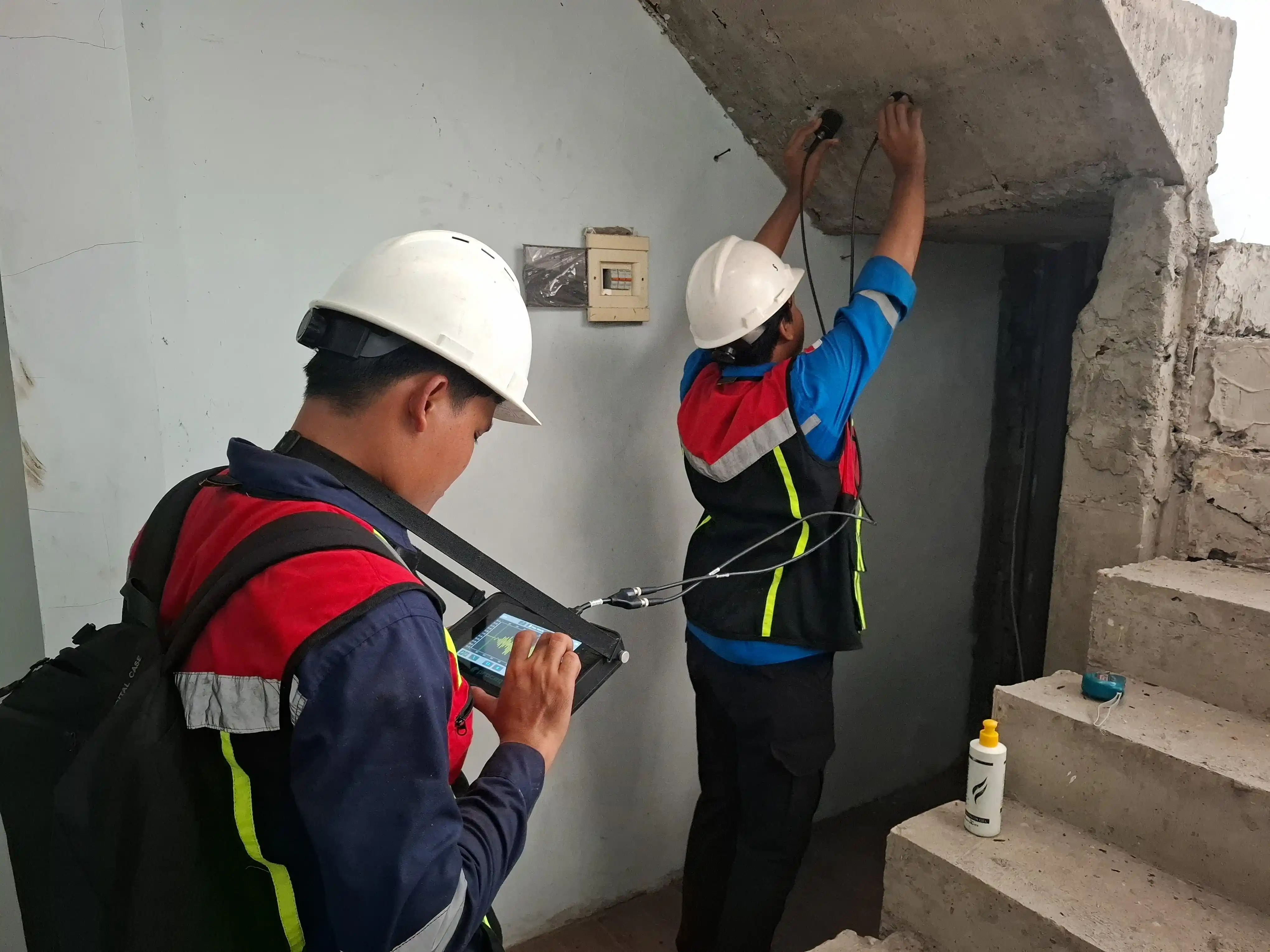
For concrete elements, the auditor checks concrete quality, reinforcement position and cover, and signs of damage such as structural cracks, honeycombing, or rusted reinforcement. Commonly used tests include hammer test, UPV, covermeter, and core drilling at critical points. Each method is explained in Testing Methods in Structural Audits: Non-Destructive vs Destructive.
4. Steel Frames and Connections
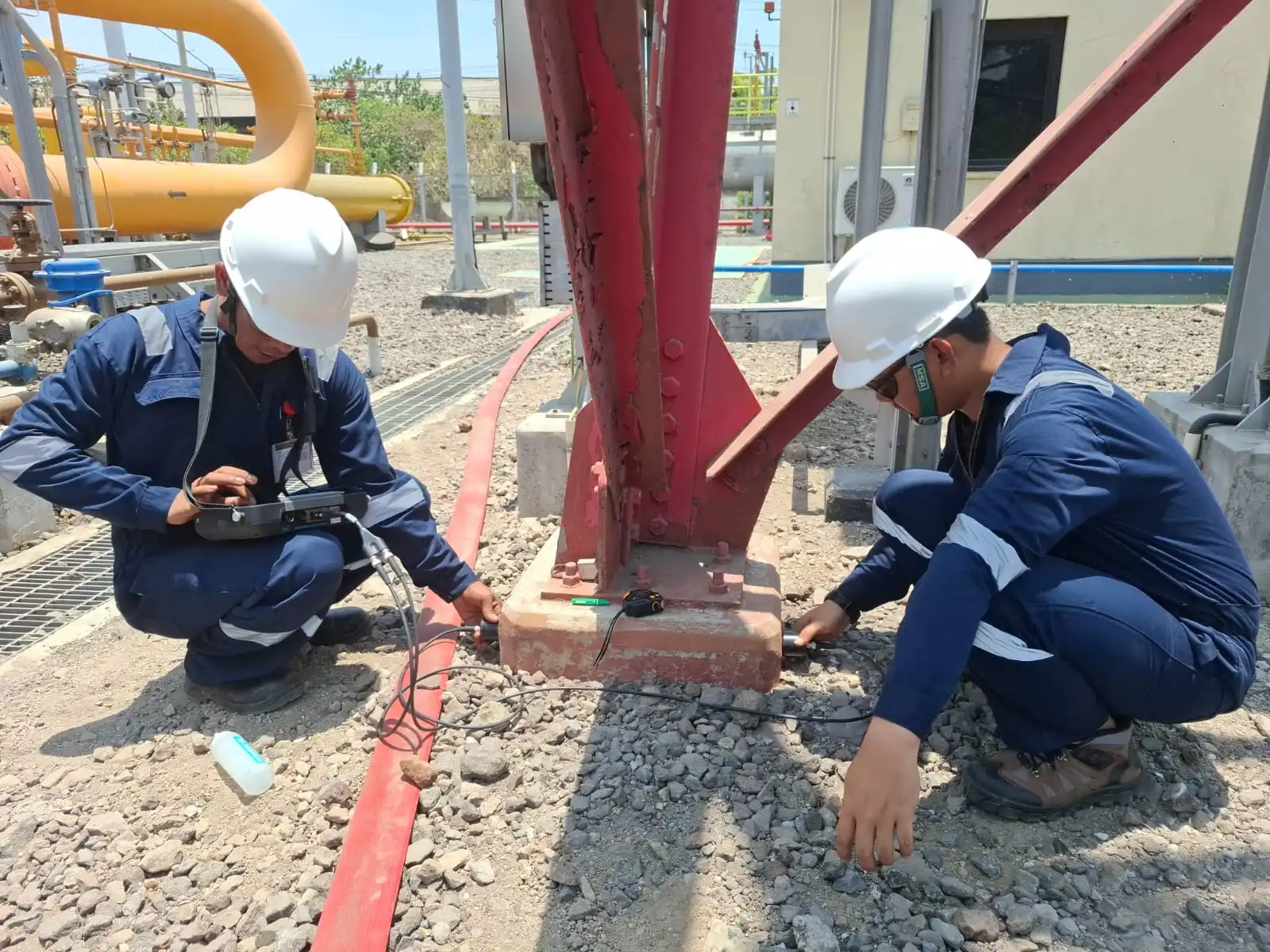
Many factories and warehouses use wide-span steel portal frames. Checks include the condition of bolted and welded connections, corrosion levels, deflection of beams and rafters, column straightness, and the completeness of bracing. Loose connections or defective welds are often the starting point of failure, yet they are hard to see from the outside. Tests such as steel thickness measurement and weld inspection can be carried out as needed.
5. Roof and Wall Cladding
Large factory and warehouse roofs receive significant wind and rain loads. The auditor inspects purlins, roof frames, wind bracing, roof sheeting, and the condition of gutters and drainage. Recurring leaks are not just a comfort issue, because water that keeps seeping in accelerates steel corrosion and damages concrete. Wall cladding must also be checked for wind resistance.
6. Industrial Environment Exposure
The operating environment affects the lifespan of the structure. Wet food and beverage plants, chemical industries, extreme-temperature areas such as cold storage, or sites near the coast accelerate material degradation. The inspection covers signs of corrosion, chemical effects on concrete surfaces, and vibration from machinery that can trigger cracking or material fatigue at connections.
7. Documents, As Built Drawings, and Legality
A technical audit must be supported by documents. The auditor matches field conditions with the as built drawings, structural calculations, and material quality data. Equally important is the building’s legality: the PBG and SLF. A building without an SLF should not be operated, and the consequences can be serious. Learn more in Penalties for Buildings Without an SLF: Fines, Sealing, and Other Risks and How to Apply for an SLF for Your Building.
When Is the Best Time to Conduct a Structural Audit?
- New buildings about to start operating, to confirm the construction matches the design and required quality
- Older buildings to be leased or purchased, as part of due diligence
- Change of use, for example from a shophouse or office to a warehouse or production area
- Adding machinery, tall racking, mezzanines, or cranes
- After an earthquake, fire, or flood, or when cracks and deflection begin to appear
Early symptoms can be recognized through 6 ‘Silent’ Signs Your Building Urgently Needs a Structural Audit.
What Do You Get from the Audit?
The result is a technical report covering the existing condition of the structure, test results, a capacity evaluation against operating loads, the level of risk found, and recommendations: safe to use, load limits needed, repairs, or strengthening. The report can also serve as supporting data for the SLF application.
The standards commonly used as references in the evaluation include Indonesian National Standards (SNI) for loading, seismic resistance, structural concrete, and structural steel, in their currently applicable editions.
Frequently Asked Questions
Does a new warehouse need an audit before use?
It is recommended. Construction errors such as concrete below specification or imperfect steel connections can occur in new buildings. An early audit helps find them before the building is filled with goods and machinery.
How long does a factory or warehouse structural audit take?
It depends on the building area, the number of test points, and the availability of documents. Field testing is usually faster than preparing the analysis and report. Our team can provide an estimate once we know the building’s initial data.
Does a structural audit stop operations?
Non-destructive tests can generally be carried out without halting all activity, and test areas can be scheduled in stages. For tests that require taking samples, local repairs are made afterward.
Conclusion
Factories and warehouses carry heavy, repeated loads, so a structure that “looks fine” is not necessarily ready for use. By checking the 7 items above, namely loads, foundation, concrete, steel, roof, environment, and documents, you can make sure the building is safe, productive, and compliant before operations begin.
PT Join Teknologi Internasional provides building structure audit and analysis services by certified experts, backed by SLF processing support. Consult your factory or warehouse audit needs via WhatsApp, free of charge.
This article was written by the structural team of PT. Join Teknologi Internasional.