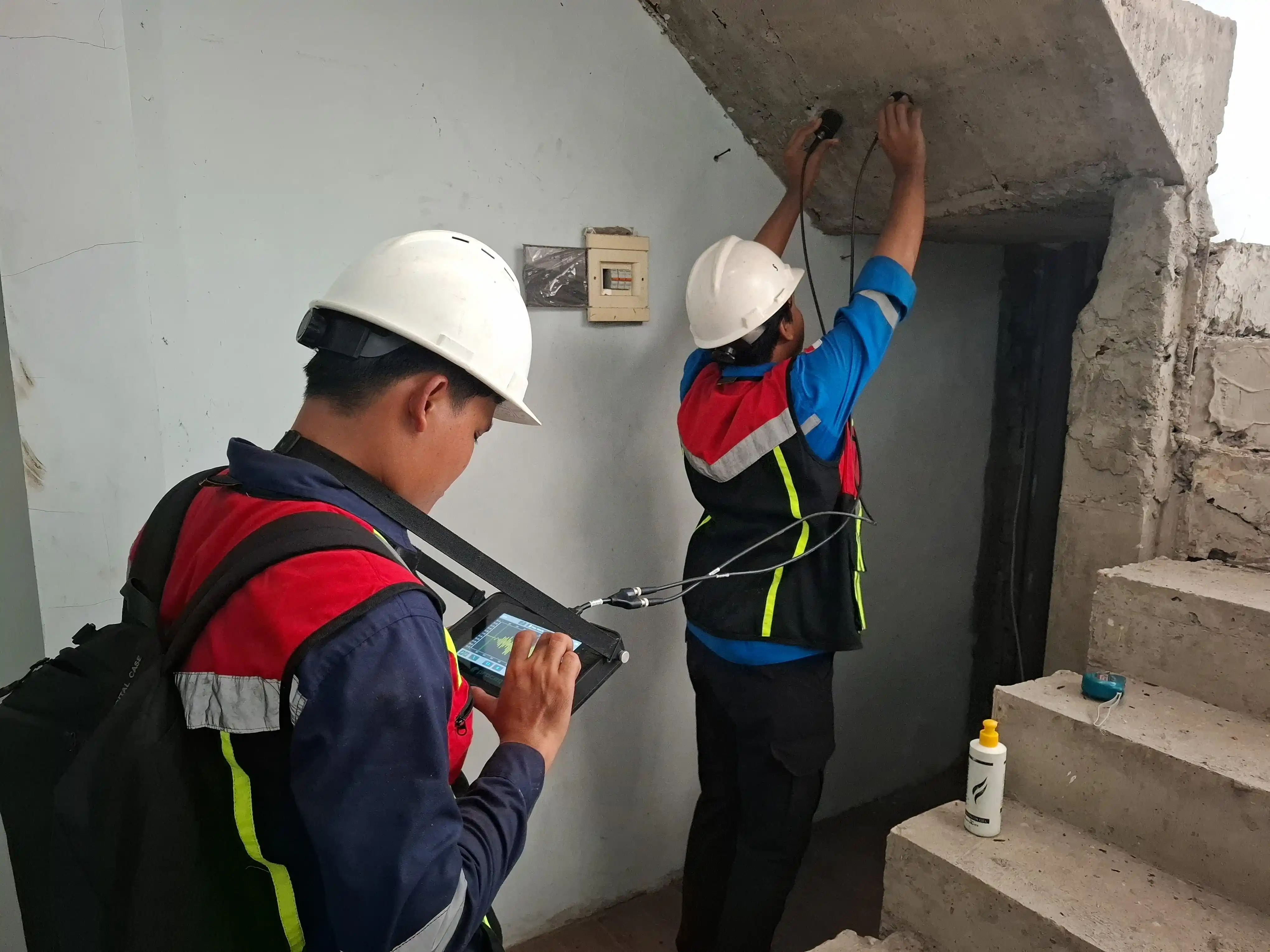
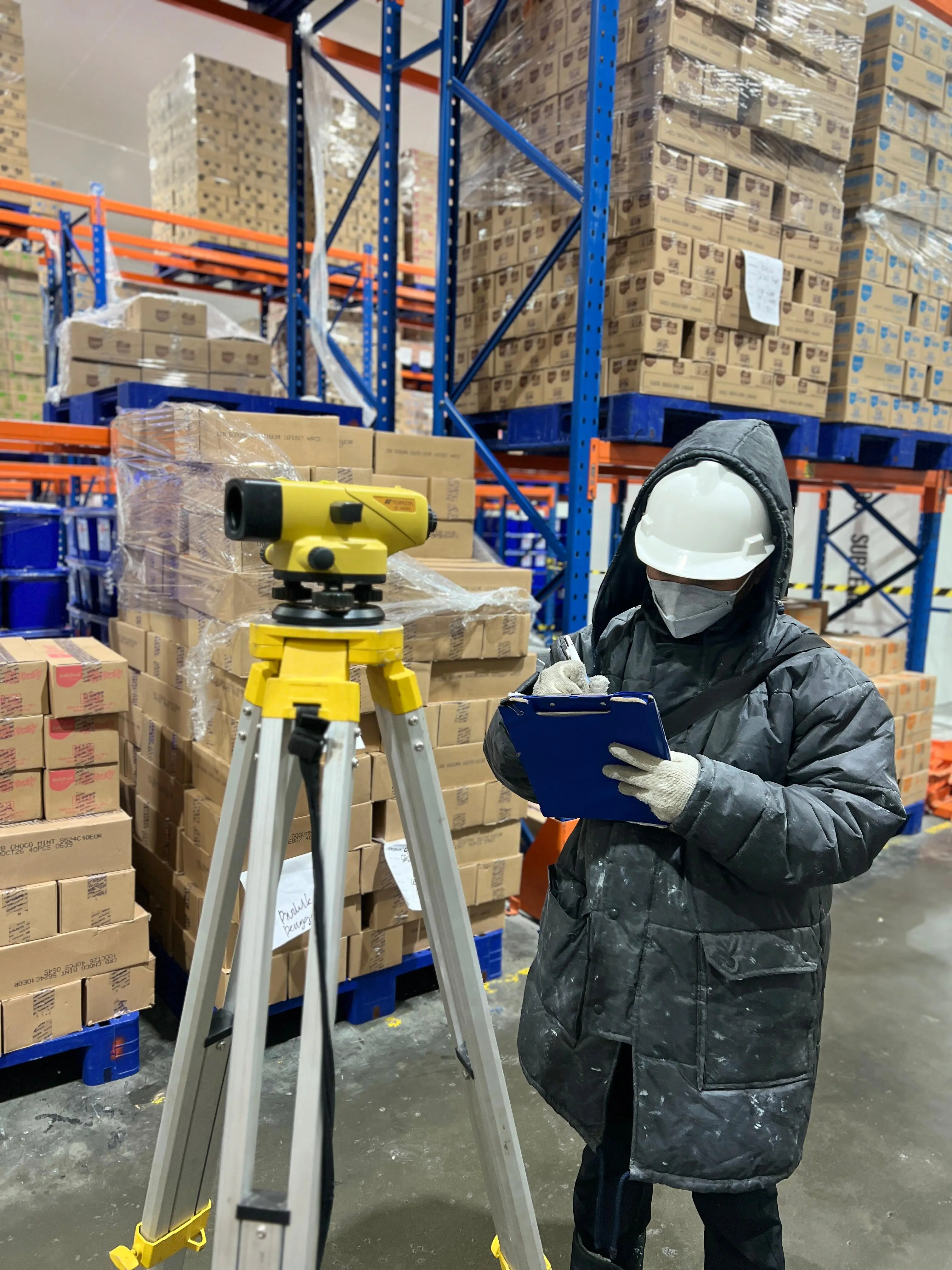
Understanding the difference and function of each method can help building owners better understand the process carried out by expert teams during a structural audit.
What Is Non-Destructive Testing (NDT)?
Non-destructive testing refers to methods carried out without damaging, or with minimal damage to, the structural element being tested. This approach is widely used because it is practical, fast, and does not significantly disrupt the building’s function. Common NDT methods include:
- Hammer Test (Rebound Hammer) Used to estimate the quality or compressive strength of concrete based on the rebound value measured on the concrete surface.
- UPV (Ultrasonic Pulse Velocity) Measures the propagation speed of ultrasonic waves through concrete to detect internal cracks, voids, or material homogeneity.
- Covermeter Test Used to determine the position, diameter, and cover thickness of reinforcing bars without needing to break open the structure.
- Carbonation Test Measures the depth of carbonation in concrete, which can trigger corrosion of the reinforcement inside.
What Is Destructive Testing?
Unlike NDT, destructive testing involves taking samples directly from the structural element, causing localized damage that must be repaired afterward. Despite this, the method provides more accurate data since samples are tested directly in a laboratory. Examples include:
- Core Drill Test Involves extracting a concrete core sample to test its compressive strength directly in a laboratory, providing more precise results than a hammer test.
- Concrete Cover Removal Performed to directly inspect the condition of the reinforcement, including the level of corrosion present.
When Is Each Method Used?
The choice of testing method depends on the building’s needs and existing condition:
- NDT methods are generally used as an initial assessment to map the overall condition of the structure without causing damage.
- Destructive methods are used at specific critical points to validate the results of non-destructive testing with more accurate laboratory data.
In practice, both methods are often used together to produce a more comprehensive and technically defensible structural audit.
The Importance of Proper Testing
Selecting the right method and testing points significantly affects the accuracy of the audit results. Testing carried out carelessly, without considering the building’s condition and history, risks producing inaccurate conclusions, which can ultimately affect decisions regarding how the building is handled.
Conclusion
Non-destructive and destructive testing methods each play a distinct role in the structural audit process. Combining both allows the expert team to obtain a comprehensive picture of a building’s condition, from initial mapping to more precise data validation. With proper testing, structural audit results can serve as a solid foundation for determining the next steps in handling a building.
This article was written by the structural team of PT. Join Teknologi Internasional.