Many building owners and managers only start looking for how to apply for an SLF when a local government inspection, a business license application, or a request from a bank or insurer comes up. The closer the deadline, the greater the risk of delays. The Jakarta provincial government, for example, has announced plans for a simultaneous building worthiness audit starting January 2026.
This guide walks through the Certificate of Functional Suitability (SLF) process from scratch, from documents and the steps in SIMBG to the mistakes that most often delay applications.
In short: An SLF is applied for online through SIMBG after construction is complete. The key requirements are the building’s legal basis (PBG/IMB), as built drawings, and a statement of functional suitability from a supervisor or technical assessor.
What Is an SLF and Who Needs One?
A Certificate of Functional Suitability (SLF) is a certificate issued by the local government stating that a building meets requirements for safety, health, comfort, and accessibility, and is therefore fit to be used for its intended function.
Every building owner is required to hold an SLF before the building is used for operations, whether it is an office, factory, warehouse, shopping center, hotel, school, or other commercial building. Under Indonesia’s risk-based business licensing system, the SLF is also part of the basic requirements, so your business license can be held up if the SLF has not been issued.
If you are still unsure how the SLF differs from the Building Construction Permit (PBG): the PBG is the permit to build, while the SLF confirms that the building is fit for use once construction is finished.
Documents to Prepare Before Applying for an SLF
Document completeness is the main factor determining how fast the process goes. In general, you will need:
- Owner or applicant identity (individual or company)
- PBG or IMB document, along with proof of levy payment
- Proof of land ownership or tenure, including a land use agreement if the land is not owned by the building owner
- As built drawings covering architecture, structure, and MEP
- Statement of functional suitability from a supervisor or technical assessor, along with the inspection report
- Environmental documents as required by regulation
- Other supporting documents depending on the building’s function and classification, such as fire protection systems
The detailed list can differ slightly between regions and building functions, so always check against the requirements in SIMBG or your local technical agency.
7 Steps to Apply for an SLF from Scratch
1. Make Sure the Building’s Basic Legal Status Is in Order
Check whether the building has a PBG or IMB, and whether what was actually built matches its permit documents. If there are added floors or changes of function that were never recorded, resolve them first, as this is a common source of rejection.
2. Prepare the As Built Drawings
As built drawings must reflect the building’s actual condition, not just a copy of the planning drawings. If these documents are lost or do not match the field conditions, an expert team can re-map the building before the assessment begins.
3. Carry Out Technical Inspection and Assessment
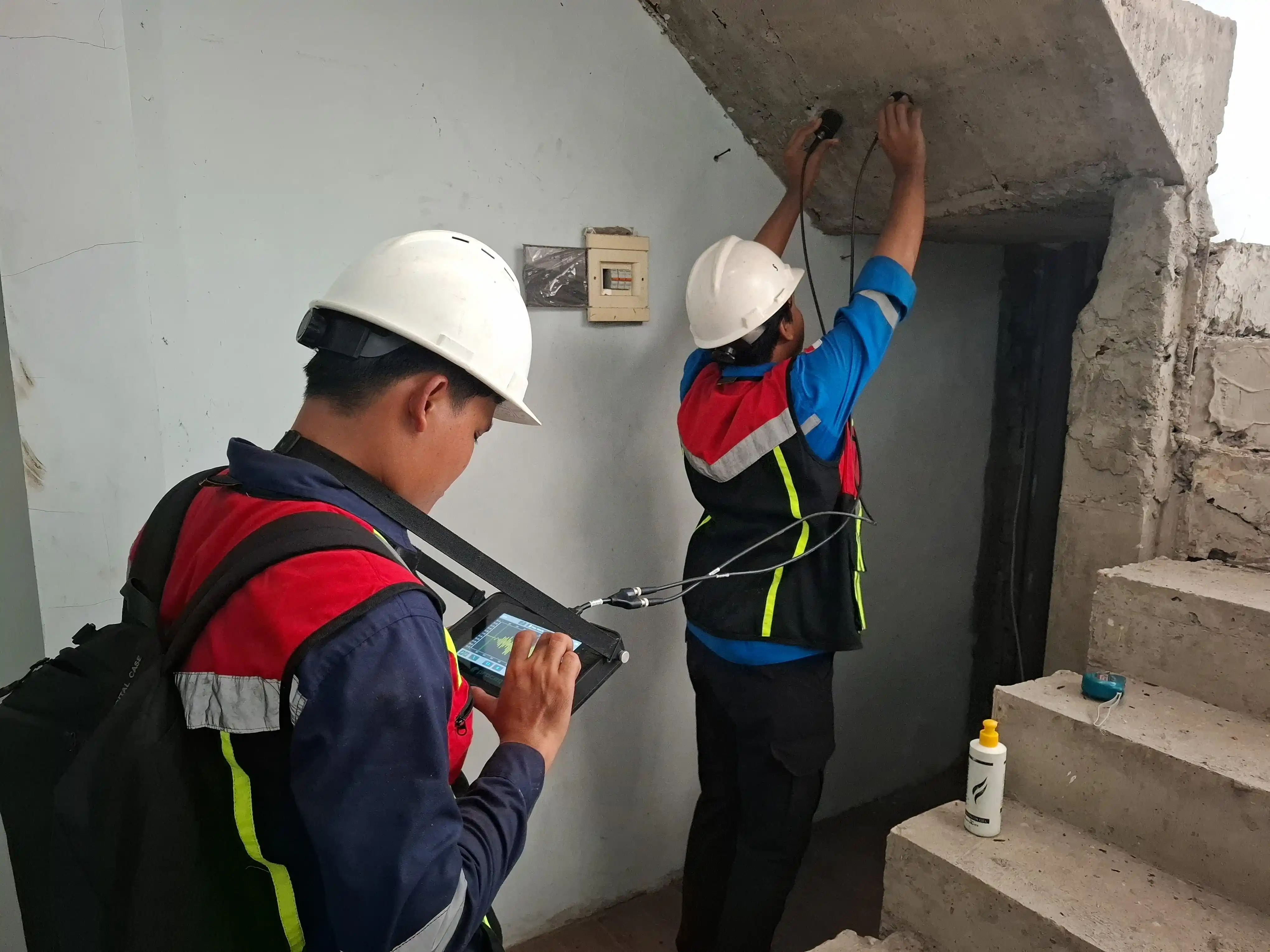
This stage is the core of functional suitability. Experts inspect the structure, architecture, MEP, and building safety systems. For the structural aspect, inspection is usually supported by field tests such as hammer test, UPV, and covermeter. You can learn about these methods in our article Testing Methods in Structural Audits: Non-Destructive vs Destructive. A valid building structure audit and analysis report is a major help as supporting data for the SLF.
4. Fix Any Findings
If the assessment reveals shortcomings, such as structural cracks, insufficient capacity, or inadequate fire protection systems, repairs must be carried out and documented before the application continues.
5. Create a SIMBG Account and Submit the Application
SLF applications are submitted online through the Building Management Information System (SIMBG), which is integrated with the OSS system for business licensing. Create an applicant account, fill in the building data, then upload all required documents.
6. Review by the Local Government
After the application is submitted, the local government checks the completeness and conformity of the documents. If something is missing, you will be asked to complete or correct it through SIMBG. Monitor your application status regularly so you do not miss any notifications.
7. The SLF Is Issued Electronically
Once all requirements are met, the SLF is issued electronically through SIMBG. Download and store the document safely, as you will need it for building audits, business license applications, and future renewals.
How Long Does the SLF Process Take?
Local governments are required to issue the SLF within a maximum of 3 working days after a complete application is received. However, the actual total time depends heavily on document readiness and the technical assessment, the two stages that usually take the longest. A building with complete documents and a sound structure can move much faster than one with missing as built drawings or technical findings that need to be repaired.
SLF Validity and Renewal
The SLF validity period depends on the type of building:
- 20 years for single and row residential houses
- 5 years for other buildings, including offices, factories, and warehouses
- Simple single houses and simple single-story row houses have no validity limit
For renewal, applications are generally submitted at the latest 60 calendar days before the validity period ends, together with a technical assessor’s report and a statement that the building’s function has not changed. Do not wait for the SLF to expire, as a lapsed SLF can become a critical finding during a building audit.
5 Common Mistakes That Delay SLF Applications
- As built drawings that do not match field conditions. Discrepancies between drawings and the actual building are the most frequent cause of revisions.
- Unregistered changes of function or added floors. The building must conform to its permit documents.
- Skipping the structural assessment. Older buildings or those showing cracks should be checked first. Learn the symptoms in 6 ‘Silent’ Signs Your Building Urgently Needs a Structural Audit.
- Incomplete land documents and land use agreements, especially for buildings on leased land.
- Starting only when the deadline is close. Allow time for technical assessment and for repairing any findings.
For older buildings without a PBG or IMB, certain provisions allow a direct SLF application for buildings that already stood before PP 28/2025 took effect, as long as they meet the specified criteria. Consult an expert about your building’s condition to make sure you take the right route.
Penalties for Operating a Building Without an SLF
Using a building without an SLF means violating a basic requirement. The consequences can include administrative sanctions on the business license, freezing or revocation of the SLF, and, in serious cases, an order to demolish the building. Beyond sanctions, having no SLF also increases legal and insurance risk if an accident or damage occurs.
Frequently Asked Questions
Can an SLF be obtained without a PBG or IMB?
In principle, a PBG or IMB is the basic document for an SLF. However, for buildings that already existed before PP 28/2025 took effect, certain provisions allow a direct SLF application. Eligibility depends on the building’s criteria and local policy.
How much does it cost to apply for an SLF?
Costs vary depending on building area, number of floors, function, location, and the complexity of the technical assessment (structure, MEP, fire protection). Contact our team for a quotation based on your building’s condition.
Can a structural audit report be used for an SLF application?
Yes. A structural audit report prepared technically and professionally can serve as supporting data in the functional suitability assessment for an SLF application.
Does the owner have to apply personally, or can a consultant help?
The obligation to hold an SLF rests with the building owner, but the technical inspection, document preparation, and SIMBG submission can be assisted by a competent consultant or technical assessment provider.
Conclusion
Applying for an SLF can go smoothly if it is prepared in the right order: basic legal status, as built drawings, technical assessment, and then submission in SIMBG. The weak points almost always lie in document completeness and the building’s technical condition, not in the online process itself.
If you want a more guided process, PT Join Teknologi Internasional provides SLF processing services from technical review to certificate issuance, supported by building permit (PBG) and structural audit services by certified experts. Consult your building’s SLF needs via WhatsApp, free of charge.
The information in this article is general in nature, may differ between regions, and may change with the latest regulations. Please verify current requirements in SIMBG or with your local technical agency. This article was written by the structural team of PT. Join Teknologi Internasional.