Have you ever heard a strange “click” sound from the floor as you walk? Or noticed a door that used to open smoothly now sticks every time you use it?
Many building owners assume these are just normal signs of aging. In reality, a building’s structure is quietly “talking” — signaling that something beneath the surface needs a closer look.
The problem is, structural damage rarely comes with a clear alarm. It creeps in slowly, and only becomes obvious once repair costs have already multiplied far beyond what they should be. For a complete breakdown of when and why a structural audit becomes mandatory, read our Complete Guide to Building Structural Audits: When and Why Your Building Must Be Audited
Here are 6 warning signs that are commonly overlooked, but should actually prompt you to schedule a structural audit right away.
1. Cracks That “Travel” Diagonally, Not Straight
Vertical hairline cracks in wall plaster are usually a normal result of material shrinkage. What you should be concerned about are diagonal cracks (at roughly a 45° angle) on walls, especially if they widen over time. This is an indication of movement or settlement in the foundation below.
2. Doors and Windows Suddenly Become “Stubborn”
If a door or window suddenly becomes hard to open or close, even though the hinges are perfectly fine, don’t be too quick to blame humid weather. This is often one of the earliest signs that the door frame — and the structural elements around it — has shifted slightly due to changes in the surrounding structure.
3. Floors Feel “Bouncy” or Start to Sag
A concrete floor should feel solid and flat. If you begin to notice slight flexing as you walk, or see faint dips in certain spots, this signals that the load-bearing capacity of the floor slab has started to weaken — especially in areas that regularly carry heavy loads.
4. Recurring Water Stains or Seepage in the Same Spot
This is the sign most often ignored. Most people assume it’s simply a roof leak. In reality, water that continuously seeps into concrete elements accelerates corrosion of the steel reinforcement inside — a process known as spalling — and it’s often only noticed once the steel is already exposed and badly rusted.
5. Creaking Sounds When Loads Change
Creaking sounds from beams or columns whenever a load changes (new machinery, tall storage racks, or heavy vehicles) is a signal that the structure is being pushed beyond its comfortable capacity.
6. Your Building Just Turned 10 Years Old — and Has Never Been Inspected
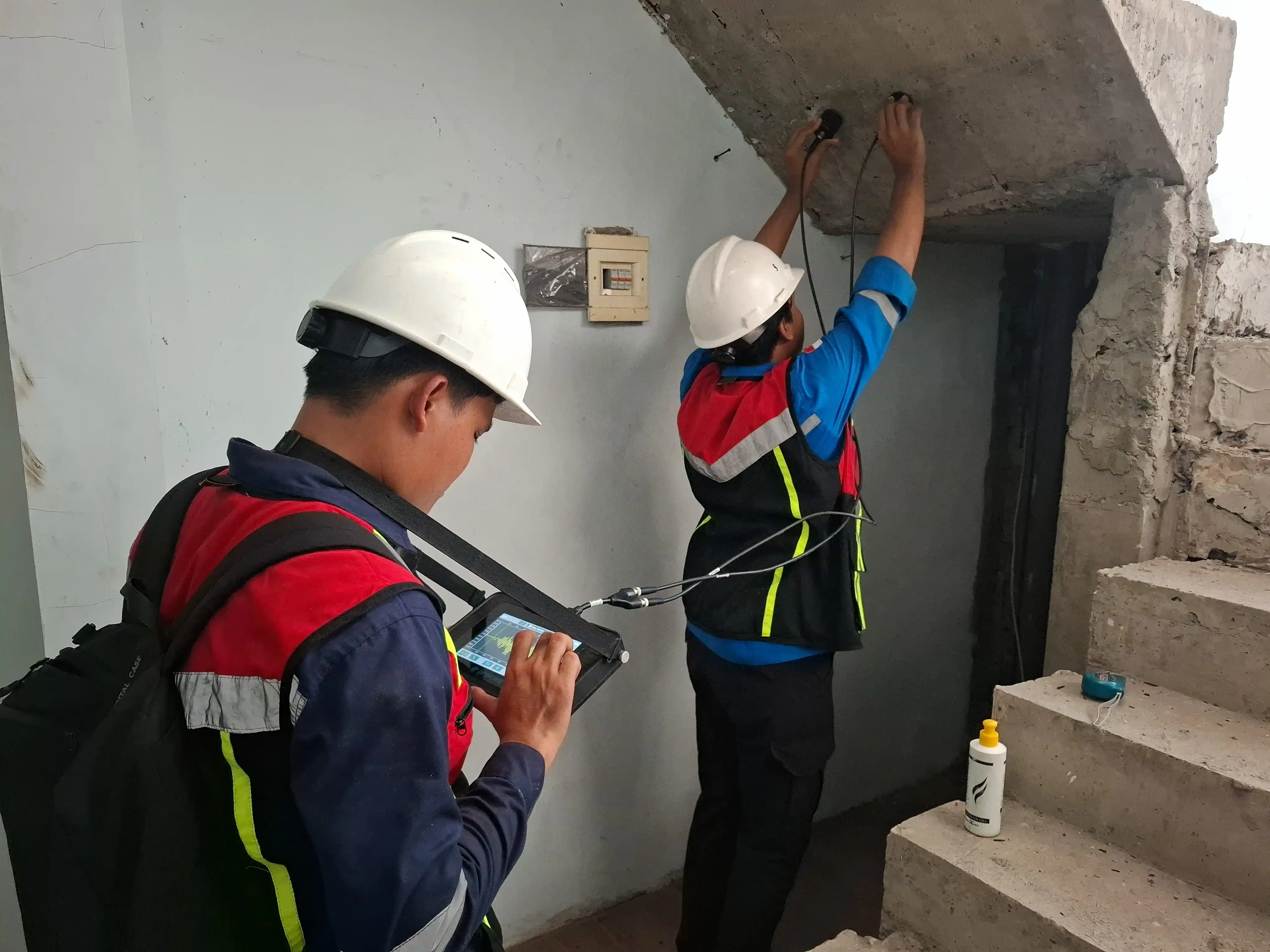
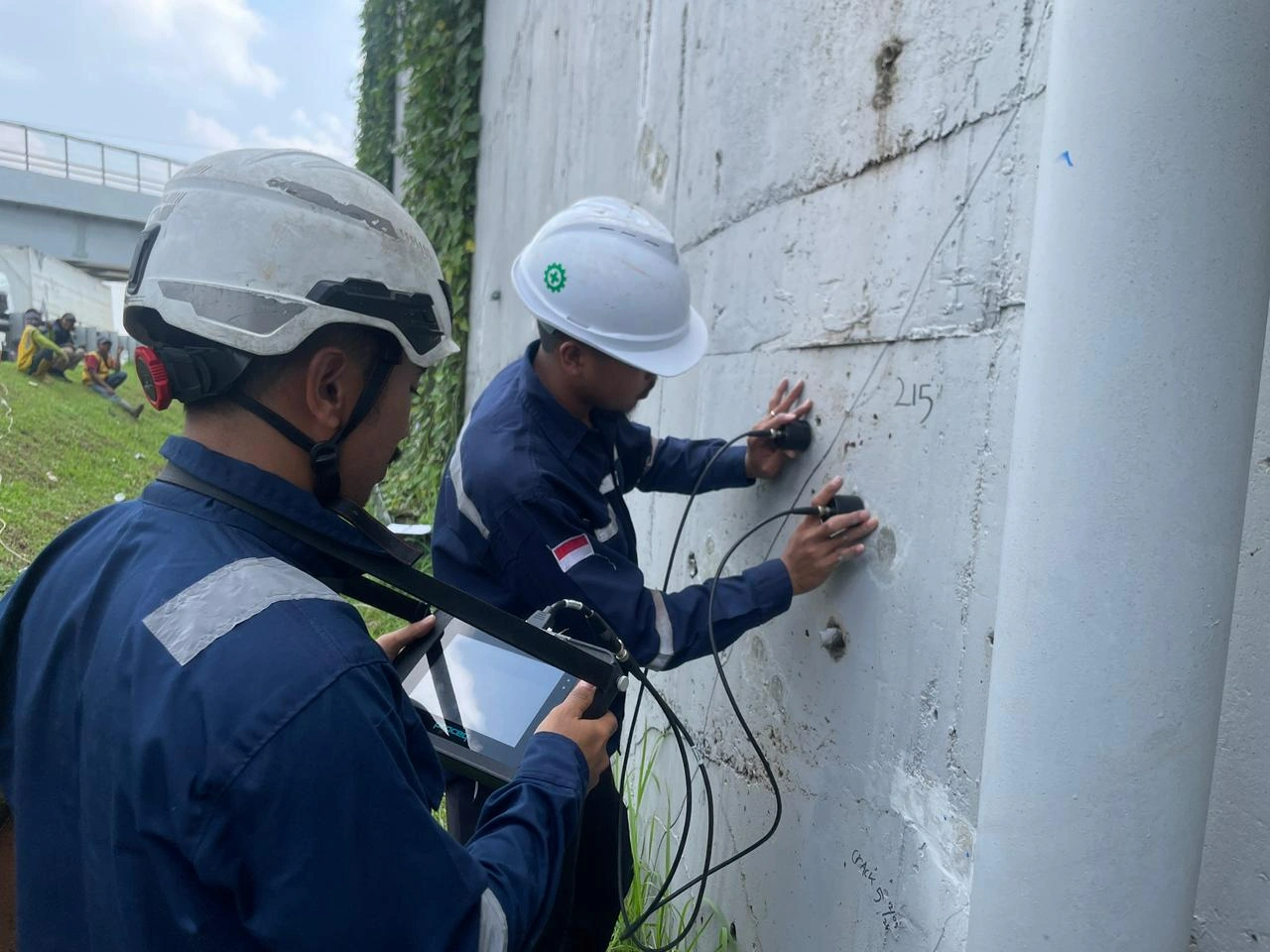
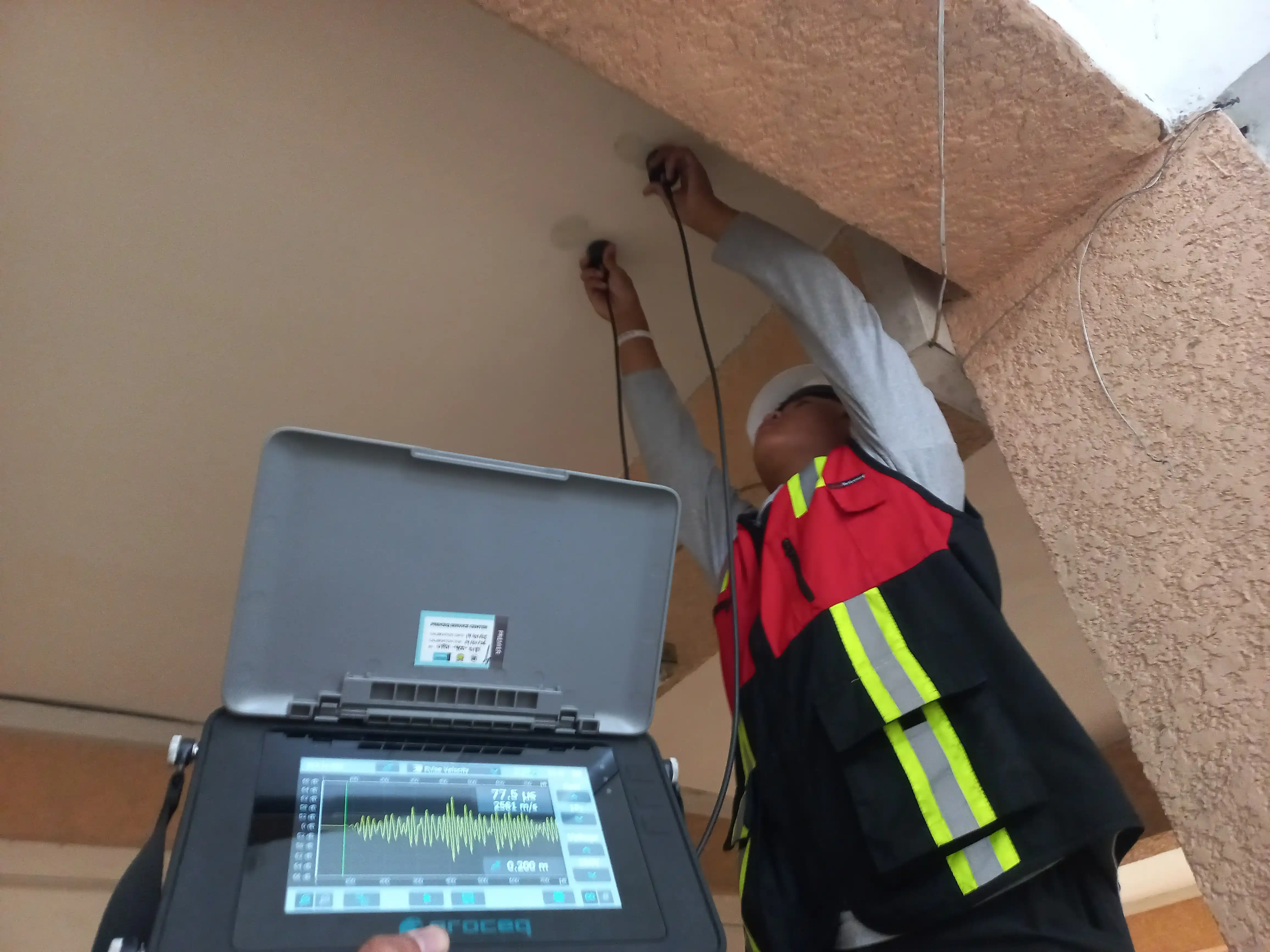
Not every sign of damage is visible to the naked eye. Age alone — without any physical symptoms at all — is already a strong enough reason for an audit, since the degradation of concrete and steel happens silently over time, driven by weather and repeated loading.
Don’t Wait Until These Signs Become a Major Problem
Each of these six signs may look minor on its own. But a combination of several of them is one of the most common reasons engineers recommend a structural audit. The sooner it’s inspected, the lower the cost and risk you’ll have to bear.
If you want to understand more deeply exactly when a structural audit becomes mandatory and how the process works, our article Complete Guide to Building Structural Audits: When and Why Your Building Must Be Audited covers it in full — from testing methods and regulatory basis, to the penalties that apply to buildings without an SLF (Certificate of Worthiness).