Did you know that many structural damages are not visible to the naked eye? A structural audit is a vital investment for safety and regulatory compliance.
Why is Structural Audit So Important?
Many building owners assume that as long as the building doesn’t appear tilted or severely cracked, it is safe. This assumption is extremely dangerous. Here are the reasons why a structural audit is imperative:
1. Preventing Structural Failure and Collapse
This is the primary objective of a structural audit. Detecting structural weakening early can prevent disasters that could cause casualties. The collapse of a newly built building at a Senior High School (SMA) in Jakarta in 2020 serves as a valuable lesson. The building collapsed due to lack of supervision during the construction process, resulting in losses and injuries.
2. Fulfilling Legal and Regulatory Requirements
In many regions, a structural audit report is a mandatory requirement to obtain a Certificate of Fitness for Use (Sertifikat Laik Fungsi/SLF). The SLF is an official document stating that a building has met the standards of functional feasibility based on technical inspection results.
The legal basis for SLF in Indonesia is regulated under Law No. 28 of 2002 on Buildings, which was subsequently updated through Law No. 11 of 2020 on Job Creation, as well as Government Regulation No. 16 of 2021 on Implementing Regulations.
3. Assessing Remaining Load Capacity
Can your building’s floor still support the weight of new heavy equipment you plan to install? An audit will answer this question scientifically.
4. Basis for Decision Making
The audit results will recommend whether the building can be sufficiently repaired locally, requires structural reinforcement (retrofitting), or must be completely demolished.
When Must Your Building Be Audited?
Don’t wait until a disaster occurs. Here are the key indicators of when you should immediately schedule a structural audit:
1. Building Age Exceeds 10-15 Years
Building materials such as concrete and steel degrade over time due to weather, humidity, and repeated loads. The older the building, the more regularly its health should be checked.
2. Change in Building Function
If you convert a standard shop house into a warehouse for heavy machinery, or add a swimming pool on the rooftop, the structural load will change drastically. An audit is needed to ensure the old structure can bear the new loads.
3. Post-Natural Disaster
Earthquakes, flash floods, or severe fires can cause fatal structural damage that might not be visible from the outside. An audit must be conducted before the building is allowed to be reoccupied.
4. Physical Damage Signs Appear
Immediately contact an expert team if you notice:
- Structural cracks on main columns or beams (not just hairline cracks on wall plaster)
- Concrete floors that are sagging or unevenly subsiding
- Exposed and severely corroded reinforcing steel (spalling)
5. Renovation or Floor Addition Plans
Adding a floor means adding dead and live loads to the foundation and columns below. A structural audit will ensure whether the existing capacity is still adequate or if foundation reinforcement is needed first.
6. Extension of Certificate of Fitness for Use (SLF)
To extend the SLF, building owners are required to include a structural audit report as supporting documentation. The SLF validity period is generally 5 years for non-residential buildings.
Structural Audit Methods Used
In the structural audit process, several testing methods are commonly used in accordance with Minister of Public Works Regulation No. 25 of 2007 and the Guidelines for Building or Structure Fit-for-Use Certificates:
1. Core Drill
Concrete testing by taking samples using a special drill. The samples are then tested in a laboratory to assess concrete strength.
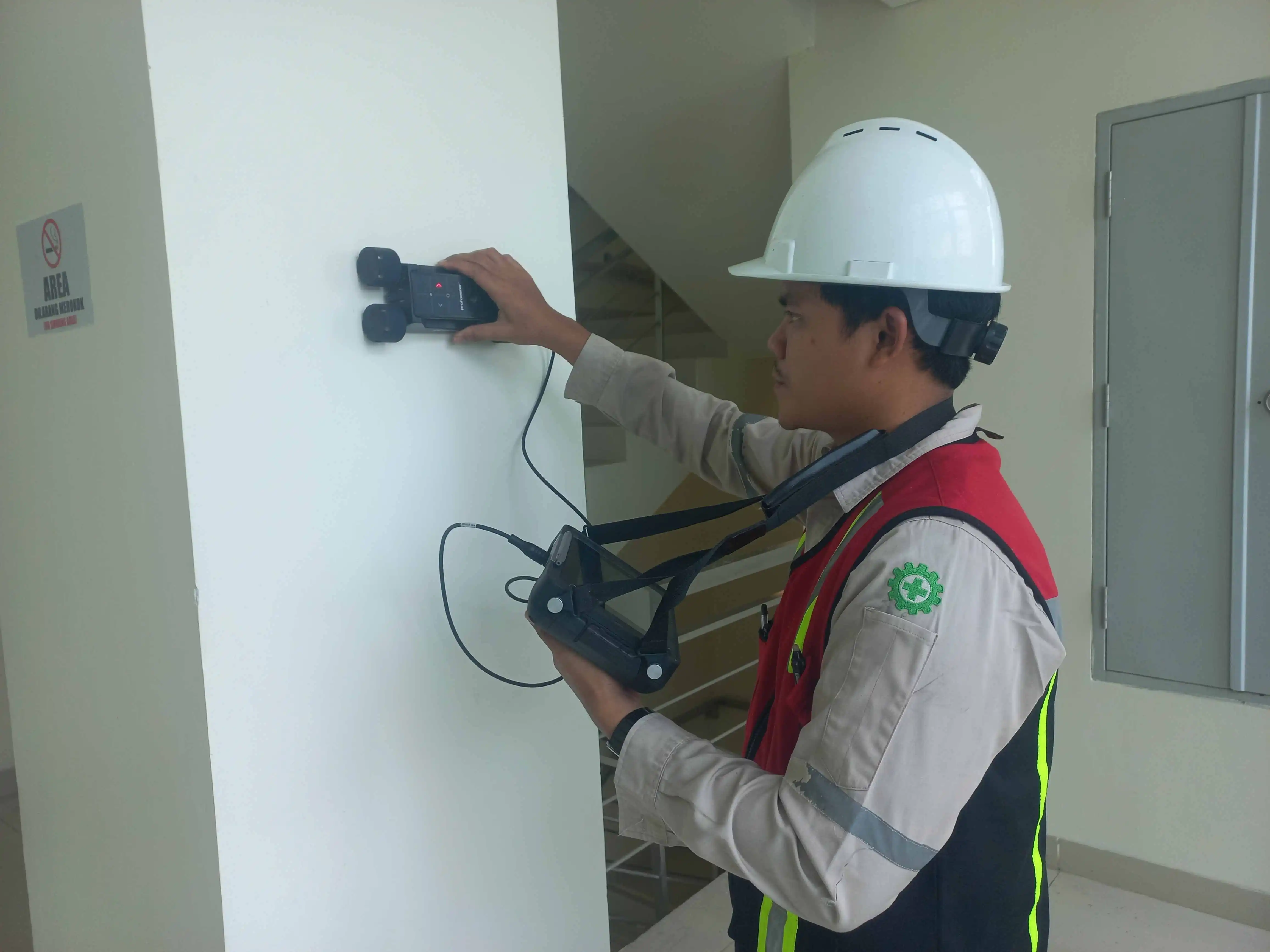
2. Rebar Scan (NDT Test)
Scanning the concrete surface using a scanner to detect its internal structure and ensure concrete suitability.
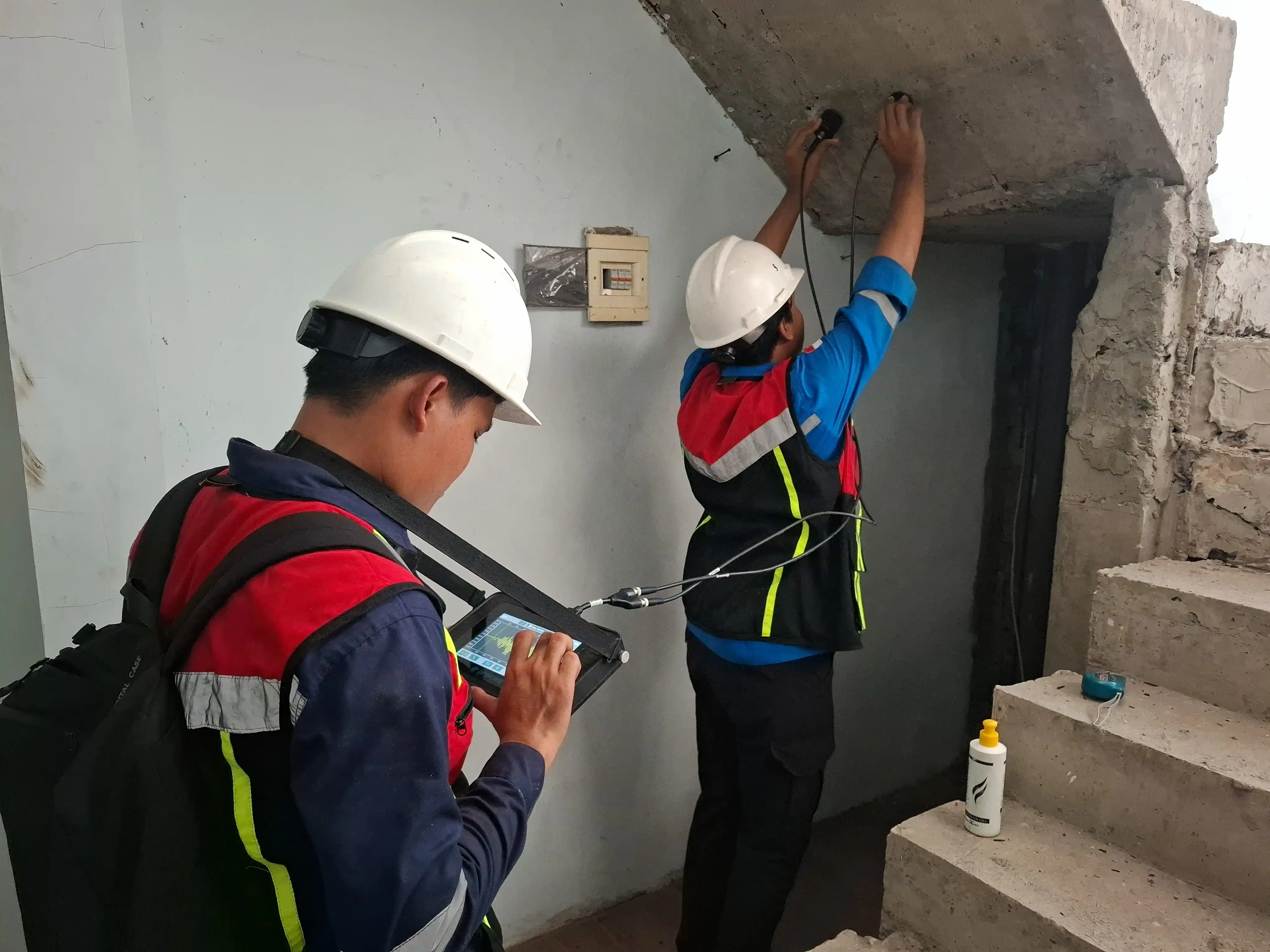
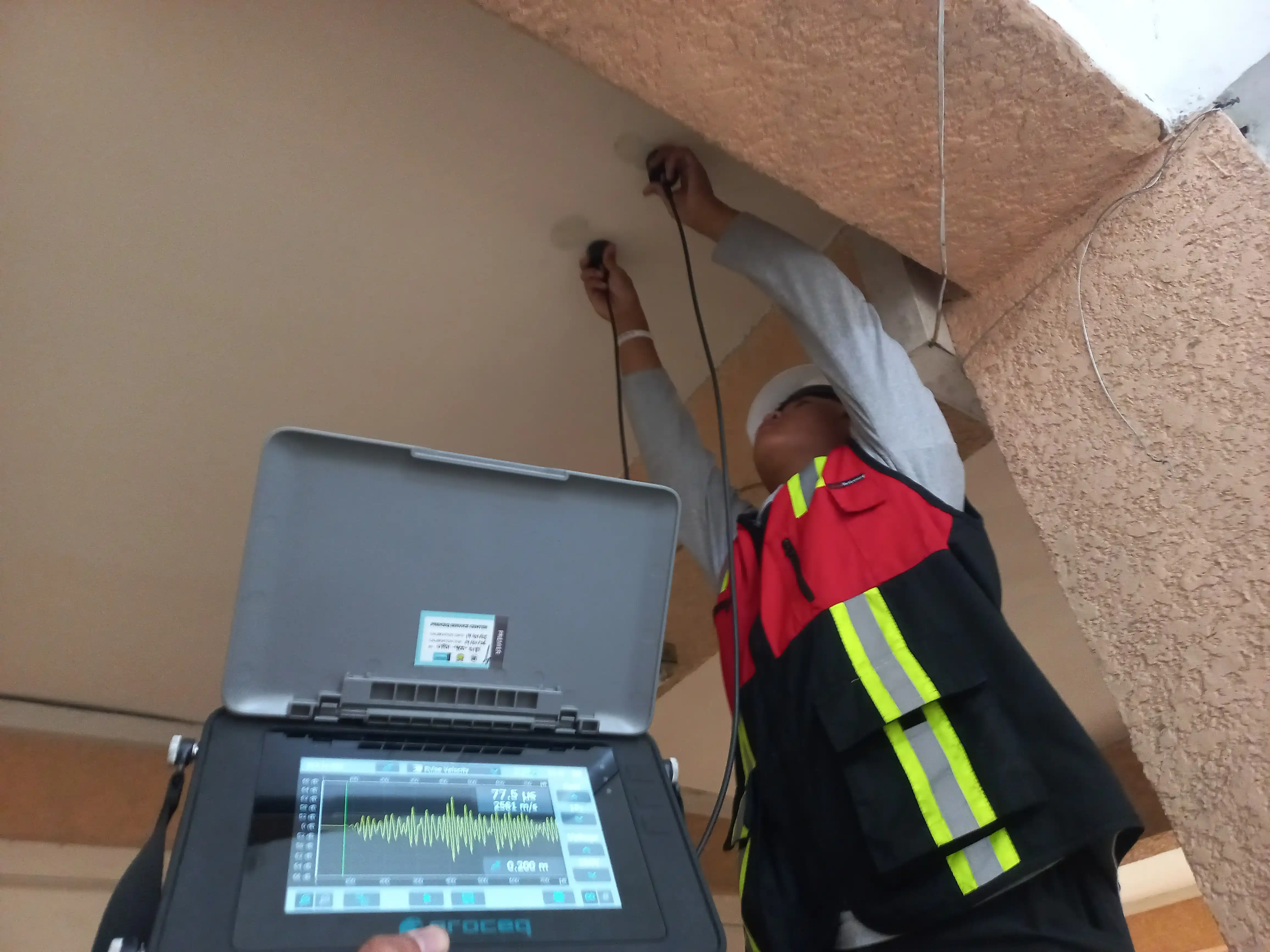
3. Ultrasonic Pulse Velocity (UPV) Test
Measuring concrete strength by emitting ultrasonic waves. The concrete’s reaction to these waves indicates its robustness and quality level.
4. Hammer Test
Testing using a Schmidt Hammer to evaluate concrete durability and homogeneity based on the pressure applied.
5. Pulse Echo Test
Using ultrasonic waves to detect damage or imperfections on building walls.
Sanctions for Buildings Without SLF
Not having an SLF can adversely impact building operations. Some consequences that may be faced include:
- Administrative fines based on regional regulations
- Restrictions on business and operational permits
- Demolition or sealing of the building by the government
For the DKI Jakarta area, building structural audits are regulated under DKI Jakarta Governor Regulation No. 20 of 2024 concerning Building Arrangement Provisions.
Conclusion
Maintaining building reliability is a long-term investment that cannot be compromised. Ignoring structural conditions is equivalent to accumulating risk. If your building meets any of the criteria above, it is time for you to take action.
PT Join Teknologi Internasional is present as your trusted partner in ensuring building safety. With certified experts and modern equipment, we are ready to assist you with:
- Building structure audit and calculation using NDT methods
- Processing of Certificate of Fitness for Use (SLF)
- Building Construction Permit (PBG) processing
- Soil investigation and geotechnical analysis
Consult your structural audit needs, building design, and geotechnical investigation with our professional team for FREE!