The problem is, these assumptions aren’t just harmless misconceptions. Some of them can actually cause building owners to delay important inspections, or make the wrong decisions about the safety of their own building’s structure.
Before you end up believing these mistaken assumptions too, let’s break down 5 of the most common myths about structural audits — along with the facts. If you’re not yet familiar with the early warning signs of a problematic building, it’s also worth reading 6 “Silent” Signs That Prove Your Building Needs a Structural Audit as a companion read.
1. Myth: A New Building Doesn’t Need an Audit
Many people assume that a young building automatically means a safe structure. In reality, errors most often occur during the construction phase itself — concrete quality that doesn’t meet specifications, incorrect rebar placement, or deviations from the design drawings. A structural audit early in a building’s life actually helps detect these deviations before they turn into major problems down the line.
2. Myth: A Structural Audit Is the Same as a Routine Inspection
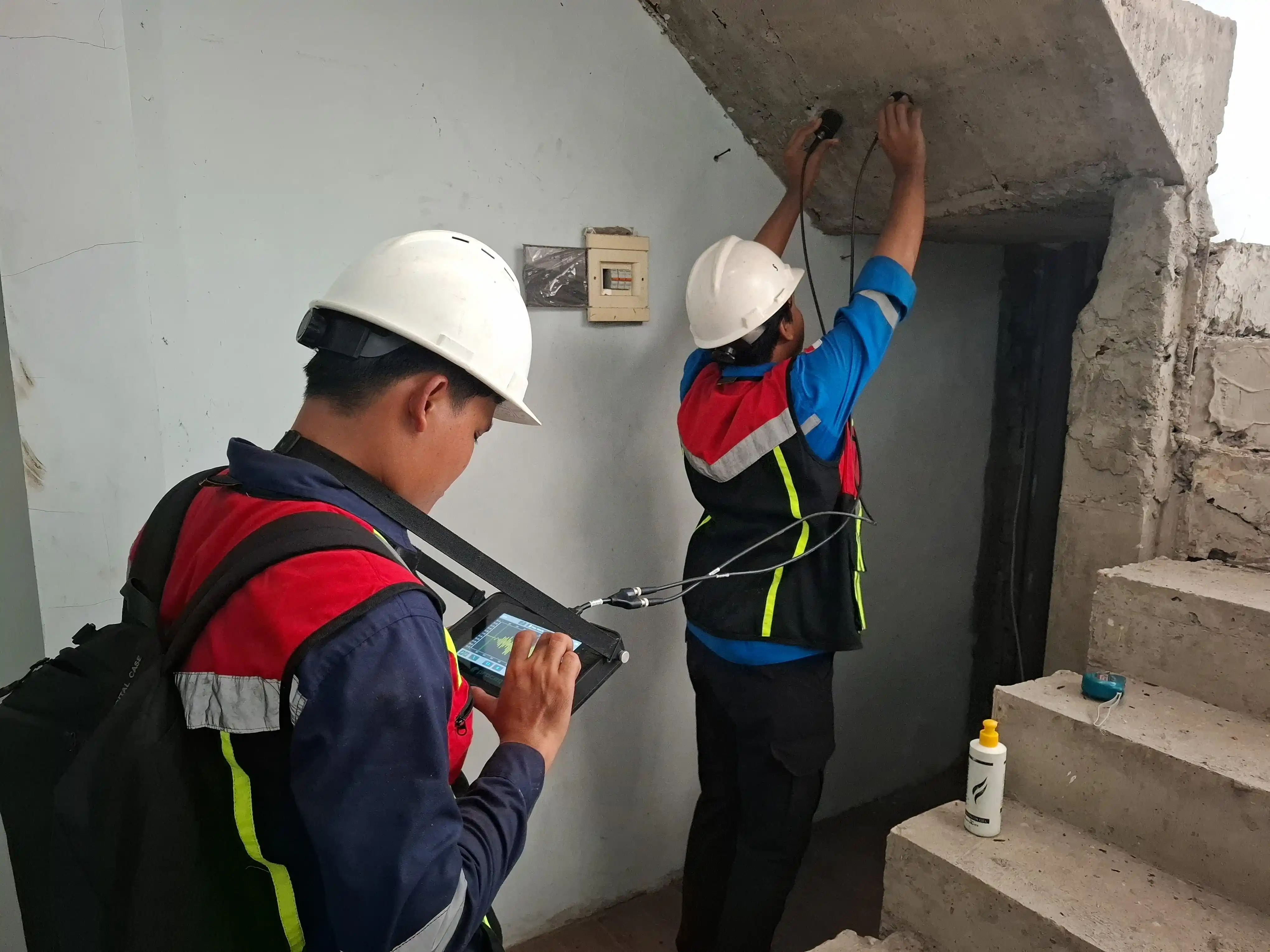
A routine inspection is generally limited to visual observation by the building’s maintenance team, without any in-depth technical testing. A structural audit is far more comprehensive: it involves certified structural engineers, field testing such as hammer tests and UPV, and capacity calculations and analysis. The result is a technical report that can be legally accounted for, not just a set of observation notes.
3. Myth: No Visible Cracks Means the Structure Is Still Safe
This is the most dangerous myth, because many structural problems show no visual symptoms at all. Corrosion of reinforcing bars, declining material quality due to age, or slow foundation settlement can already be underway for years without any visible cracking on the surface. A structural audit with proper testing is exactly what’s needed to detect these “invisible” problems early.
4. Myth: A Structural Audit Is Only Needed When Applying for an Occupancy Certificate
It’s true that a structural audit report is one of the requirements for obtaining a Certificate of Worthiness of Function (SLF). But if the audit is only carried out as an administrative formality, its main purpose — protecting the safety of occupants — gets overlooked. A structural audit should ideally be conducted periodically, not merely to satisfy a permit requirement.
5. Myth: The Cheaper the Audit, the Better the Deal
A low price often means incomplete testing, too few test points, or work carried out without certified engineers. Inaccurate audit results can have serious consequences: real structural problems may go undetected, only to be discovered later once the damage has grown, with a far higher repair cost.
Don’t Let Myths Determine Your Building’s Safety Decisions
The five myths above all point to the same underlying issue: many important decisions about a building’s safety are made based on assumptions rather than actual technical data. Yet a building’s structure is the foundation of safety for everyone who uses it.
If you’re still unsure when the right time is to start auditing your building’s structure, the article Complete Guide to Building Structural Audits: When and Why Your Building Must Be Audited offers a thorough reference before you make that decision.